Browse > Home /

Index: Hungary faces squeeze on freedoms


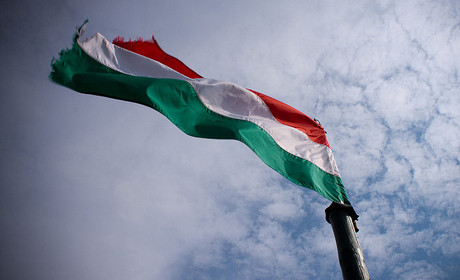
Copyright: Zselosz in Flickr. Some rights reserved

Sándor Orbán, the director of the South East European Network for Professionalisation of Media, reports for Index on Censorship on the raft of new laws passed by the ruling Fidesz party and the threat to democracy and media freedom.

The new constitution put an end to liberal democracy in Hungary. It was pushed through the parliament without any public discussion by a populist prime minister, who used his party’s super-majority to rush the legislation, passed in only few weeks last spring.

Hundreds of controversial new laws — including the ones on media — have been passed since the Hungarian Civic Union, Fidesz, came to power in 2010. Their election has led to the elimination of many of the checks and balances in the democratic system.

See the full post on Index at this link.

See Journalism.co.uk’s full coverage of Hungary’s controversial media law reform at this link.

Tags: , ,

Similar posts:

Pakistan tops another 2011 journalist death toll

January 3rd, 2012 | No Comments | Posted by in Press freedom and ethics


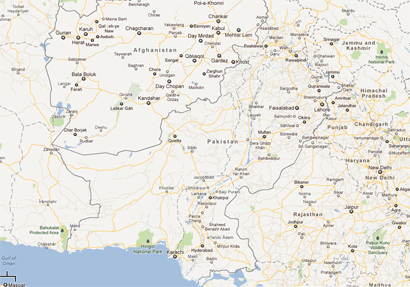
Google Maps image of Pakistan

Pakistan has topped another 2011 list of countries ranked by the number of journalist killings, this one recorded by the International Federation of Journalists.

It follows being named the “deadliest country for journalists” in 2011 by the Committee to Protect Journalists in its December report.

The latest toll reported a total of 106 journalist and media worker deaths worldwide last year, in what the IFJ called “another bloody year for media”.

The organisation has written to the secretary general of the UN calling “for effective implementation of international legal instruments to combat the prevailing culture of impunity for crimes against journalists”.

The IFJ report found a total of 11 deaths in Pakistan, the same figure was also reported for Iraq and Mexico.

Tags: , , , , ,

Similar posts:

Journalists shot dead in Somalia and Russia

December 19th, 2011 | No Comments | Posted by in Press freedom and ethics

Last week it was reported that the founder of independent Russian newspaper Chernovik was killed after being shot at 14 times.

The BBC reports that Gadzhimurat Kamalov “was hit by a hail of bullets” as he left his workplace in Dagestanon in the North Caucasus on Thursday, referred to by the Committee to Protect Journalists as the “most dangerous place for reporters” in Russia.

According to the press freedom group, reporters from the title “have been routinely persecuted for their work”.

“The assassination of Gadzhimurad Kamalov is a massive loss for independent journalism in the North Caucasus, Russia’s most dangerous place for reporters,” CPJ Europe and Central Asia Program Coordinator Nina Ognianova said. “Russian authorities must immediately, thoroughly, and effectively investigate this terrible crime and bring Kamalov’s killers to justice.”

This was followed with news over the weekend that a journalist working for a Somali television station was also killed after being shot in Mogadishu.

According to a report by Reuters, Abdisalan Sheikh Hasan “was shot dead in the capital Sunday by a man wearing a government soldier’s uniform, witnesses said”.

Tags: , , , , ,

Similar posts:

Reporters Without Borders secretary-general to step down in new year

December 14th, 2011 | No Comments | Posted by in Press freedom and ethics

Press freedom organisation Reporters Without Borders announced this week that its secretary-general Jean-François Julliard will step down on 31 January, in order to take up a role as director-general of Greenpeace France.

According to the announcement from RSF, “the organisation’s board of governors is currently looking for a replacement”.

Until they find a successor for Julliard, who was first appointed to the position in 2008, the organisation’s current representative in Brussels, Olivier Basille, will cover the role.

In a statement Julliard said:

I am leaving Reporters Without Borders at a time when it is in good shape. I have been pleased with what we have achieved recently. The development of our cyber-censorship unit and our repositioning as a press freedom NGO in both France and Europe have been important changes for our organisation.

We have just opened a bureau in Tunisia for the first time and we are soon going to reinforce our activities in Libya. I hope that this development at the international level will continue. Reporters Without Borders will have more exciting challenges to face.

Tags: , ,

Similar posts:

Two-year anniversary of massacre of 30 journalists in Philippines

November 23rd, 2011 | No Comments | Posted by in Press freedom and ethics

Two years ago today 30 journalists and two support workers were killed in the Philippines in the “Maguindanao Massacre”, and what Index on Censorship has described as the “single deadliest event for the media”.

Today, 23 November, also marked the inaugural International Day to End Impunity; last year a Global Day of Action was held to mark the first anniversary of the massacre.

Index on Censorship, Article 19, the Committee to Protect Journalists and English PEN have joined forces with several freedom of expression pressure groups around the world to call for demanding justice for journalists’ murdered in the line of duty.

In a post, Index on Censorship said:

In the past 10 years, more than 500 journalists have been killed. In nine out of 10 cases, the murderers have gone free. Many others targeted for exercising their right to freedom of expression — artists, writers, musicians, activists — join their ranks.

On this day two years ago the single deadliest event for the media took place when 30 journalists and two support workers were brutally killed in Ampatuan, Maguindanao province, The Philippines. The journalists were part of a convoy accompanying supporters of a local politician filing candidacy papers for provincial governor. In total the “Maguindanao Massacre” as it has come to be known, claimed 58 victims. Not one of more than a hundred individuals suspected of involvement in the atrocity has been convicted yet.

We join those in the Philippines not only in honouring their slain colleagues, friends and family members, but demanding justice for them and hundreds more in Russia, Belarus, Pakistan, Sri Lanka, Mexico, Colombia, Iraq and Somalia and other countries where killings of journalists and free expression activists have repeatedly gone unpunished. Above all we demand an end to the cycle violence and impunity.


Tags: , , , ,

Similar posts:

‘Silencing the messenger is all too often the name of the game’: Mark Austin speaks at St Bride’s

November 10th, 2011 | No Comments | Posted by in Editors' pick, Press freedom and ethics

The address given by ITV News at Ten presenter Mark Austin at St Bride’s Church yesterday (Wednesday), for the service to commemorate journalists who have died while covering conflicts across the world, has been published online.

He opened by talking about his own recent travels with a cameraman to Mogadishu in Somalia, and the “considerable risk” faced. He said the need to resort to protection from armed men “to watch our backs every step of the way” was a cause of “considerable sadness, and in a sense, guilt”.

Sadness, because of what it says about what has happened to our trade. Where once the neutrality and independence of the media was widely recognised and respected, now it’s clear journalists are being specifically targeted or sought out by those who fear the truth emerging. It’s no longer enough to blame the messenger, it seems. Silencing the messenger is all too often the name of the game now. And guilt because of the glaring inequality that now exists in journalism. I can insist on that security in Somalia, I am insured and have the backup of a large organisation with considerable resources and which makes safety a priority. But by and large the journalists we should be thinking about and honouring tonight have no such protection . They are the local reporters and photographers and freelancers in places like Somalia, who put their lives on the line every single day.

See his full address here.

Tags: , , , ,

Similar posts:

Index: Take action to end impunity

November 9th, 2011 | No Comments | Posted by in Politics, Press freedom and ethics

This coming 23 November will be the second anniversary of the 2009 Maguindanao Massacre in the Phillippines, in which 34 journalists were murdered during election related violence in the country.

Last year, on the first anniversary, there was a “global day of action” to commemorate the killings.

This year, the second anniversary will also be the inaugural Day to End Impunity, organised by the International Freedom of Expression Exchange.

Index on Censorship is marking the event by revealing on each of the 23 days of November leading up to it the story of a journalist, writer or free expression advocate who was killed in the line of duty and whose case remains unsolved.

Read the first nine:

1 November: Mohammad Ismail
2 November: José Bladimir Antuna Garcían
3 November: Abdul Razzak Johra
4 November: Laurent Bisset
5 November: Carlos Alberto Guajardo Romero
6 November: Wadallah Sarhan
7 November: Ahmed Hussein al-Maliki
8 November: Francisco Castro Menco
9 November: Dilip Mohapatra

Visit Index’s Take Action to End Impunity site at this link.

Tags: , , , , ,

Similar posts:

#wef11: ‘News industry is in the vortex of a fast changing world’

October 13th, 2011 | No Comments | Posted by in Events, Press freedom and ethics

Newspapers are “in a vortex of a fast changing world”, the new president of the World Association of Newspapers and News Publishers Jacob Mathew, who was elected in April, said today (Thursday, 13 October) as he opened the World Editors Forum in Vienna.

His speech focused on calling for greater press freedom and new business ideas. “Soaring costs are a challenge that we should meet with innovation”, he said.

He also touched on the issue of ethics in relation to the UK phone-hacking scandal, calling for self-regulation of the press to be maintained. The print media enjoys the highest credibility, he said, and while there have been calls for new legislation it was important to note that “increased government regulation is not the answer”.

The media would be better governed by a self regulatory mechanism which holds its journalists to account, he added.

Mathew also called on print publishers to join together in the battle to protect intellectual property rights.

It is time that the print publishers get together to strategize to prevent others from freeloading on their content. We need to monetise and not lose out.

Our industry is in the vortex of a fast changing world. The challenges and the opportunities are greater than ever before.

Follow the #wef11 hashtag on Twitter and @journalism_live for updates from the World Editors Forum in Vienna over the next few days.

Tags: , , , , , ,

Similar posts:

BBC news chief calls for pressure on Iran after threats to journalists’ families

October 5th, 2011 | No Comments | Posted by in Press freedom and ethics

The director of BBC Global News, Peter Horrocks, has called on the government to “take all necessary means” to deter the Iranian government from attempts to “undermine free media” in Iran.

Writing on the BBC Editors’ blog, Horrocks says that the families of UK-based Iranian journalists working for the BBC have been harassed, arrested and threatened in Iran in order to encourage their relatives to stop working for the corporation.

The article states:

Iranian police and officials have been arresting, questioning and intimidating the relatives of BBC staff. We believe that the relatives and friends of around 10 BBC staff have been treated this way.

Last month a group of filmakers were arrested in Iran. Contrary to reports on state TV in Iran, they where not members of staff,  but the BBC Persian channel had bought the rights to their films and they are therefore “paying the price for an indirect connection to the BBC”, according to Horrocks’ post.

These actions and threats against the BBC have been accompanied by a dramatic increase in anti-BBC rhetoric. Iranian officials have claimed that BBC staff are employees of MI6, that named staff have been involved in crimes, including sexual crimes, and that BBC Persian is inciting designated terror groups to attack Iran.

Whilst these claims are clearly absurd, the intensity of language magnifies the fears of BBC staff for their family and friends back in Iran. Given the vulnerability of those family members we have thought hard about drawing attention to this harassment. But this public statement has the full support of all staff whose families have been intimidated.

In the statement Horrocks calls on the government for assistance.

The BBC calls on the Iranian government to repudiate the actions of its officials. And we request the British and other governments take all necessary means to deter the Iranian government from all these attempts to undermine free media.

Tags: , , ,

Similar posts:

Guardian: How Luke Harding became the reporter Russia hated

The Guardian’s former Moscow correspondent Luke Harding has a lively piece up on his time as the city’s harassed-western-journalist-in-chief.

Ahead of the publication of a book by Harding on his quarrels with Russia’s security forces, he describes being intimidated and having his flat regularly broken into, and his deportation and Russia’s u-turn in letting him back in.

There could be no doubt: someone had broken into my flat. Three months after arriving in Russia as the Guardian’s new Moscow bureau chief, I returned home late from a dinner party. Everything appeared normal. Children’s clothes lying in the corridor, books piled horizontally in the living room, the comforting debris of family life. And then I saw it. The window of my son’s bedroom was wide open…

Read the full article on Guardian.co.uk at this link.

Tags: , , , , ,

Similar posts:

© Mousetrap Media Ltd. Theme: modified version of Statement