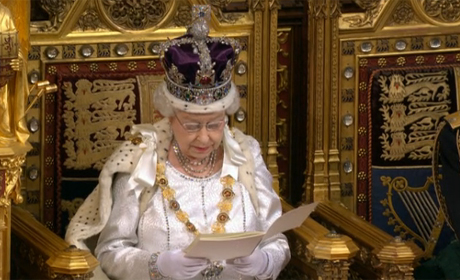
The Libel Reform Campaign announced a “victory” today as the Queen’s Speech confirmed legislation will be introduced in the next 12 months to reform defamation law.
The campaign issued a number of comments from those involved in the campaign, some of which are listed below:
Tracey Brown, managing director, Sense About Science:
We and thousands of others have campaigned to stop the libel laws’ bullying and chilling effects on discussions about health, scientific research, consumer safety, history and human rights. We are really pleased to see the government has moved closer to honouring its promise of a fairer law and protection of free speech in today’s Queen’s Speech. This opens the way to developing a law guided by public interest not powerful interests.
Simon Singh, defendant in British Chiropractic Association v Singh:
I continue to be contacted by journalists, scientists and others who are being silenced by libel threats or libel claims. The reform promised in the Queen’s speech today is a welcome response to the intolerable effects of the current laws. I hope that the government will now move rapidly to bring forward a bill that protects those writing about serious matters in the public interest.
Jo Glanville, editor, Index on Censorship:
We have now have a chance for libel legislation that’s fit for the 21st century. The introduction of the single publication rule and greater protection for internet service providers will help to put an end to the chilling effect online.
Justine Roberts, co-founder and CEO, Mumsnet:
While the draft Defamation Bill was a very good start, it didn’t go far enough to protect freedom of expression, particularly in the online environment. Websites and hosts of user-generated comment risk becoming tactical targets for those who wish to clamp down on criticism or investigation of their activities.
Philip Campbell PhD, editor-in-chief, Nature:
It is essential to the public trust in science that scientific integrity is upheld and that bad behaviour is brought to light. It is therefore imperative that libel legislation be revised to achieve a better balance of interests between those accused of misconduct and those who should be better able to write about them.
Hardeep Singh, journalist and libel defendant:
The inclusion of the defamation bill in the Queen’s Speech marks a major milestone for The Libel Reform Campaign. It can’t be right that ordinary people risk their livelihoods when getting caught up in costly libel proceedings.
The government has already investigated ways to weed out unmeritorious claims, whereby claimants will have to show serious harm before a case progresses. If passed by Parliament, these types of amendments will not only make our libel laws fairer, but go some way in restoring London’s reputation from being a ‘town called sue’.
Till Sommer, Internet Service Providers Association:
ISPA welcomes the Government’s commitment to libel reform. The current regulatory framework has failed to provide clarity to hosting and Internet service providers and has ultimately has had a chilling effect on freedom of speech online. We hope that Parliament will address the current shortcomings in the upcoming session and we will follow the political process closely to ensure that the reforms strike the best possible compromise between protecting providers, claimants and authors.
Dagbladet, Norway’s second-largest tabloid newspaper, is offering its readers a ‘Breivik-free’ version of their website during the trial of Anders Behring Breivik.
By pressing a button at the top of the homepage marked “Forside uten 22. juli-saken”, readers can remove all mention of the high-profile trial.
Torry Pedersen, editor-in-chief of Verdens Gang, a Norwegian tabloid, told Journalisten.no that his paper considered the idea of having a similar button.
We toyed with the idea. We did the same – inspired by the Guardian – for the Prince’s wedding last year.
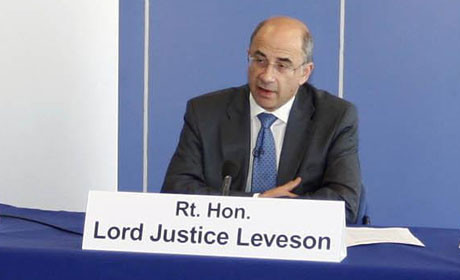
The judge leading the public inquiry into press ethics has called for applications for core participant status for module three of the Leveson inquiry, which will look at the relationship between the press and politicians.
Lord Justice Leveson is currently hearing module two of the inquiry, the relationship between the press and police, having heard evidence for module one, the relationship between the press and the public.
According to an announcement on the inquiry website applications for core participant status - which allows participants to be legally represented at the inquiry and have questions asked on their behalf – must be made by the end of Friday (30 March).
These applications and other issues will be considered at a directions hearing for module three to be held at 2pm on Tuesday, 2 April.
Module four will look at “recommendations for a more effective policy and regulation that supports the integrity and freedom of the press while encouraging the highest ethical standards”.
The statistics relate to injunctions dealt with in any civil proceedings in the High Court or Court of Appeal in London where the court considers an application for an injunction prohibiting the publication of private or confidential information, the continuation of such an injunction, or an appeal against the grant or refusal of such an injunction.
The report shows that from August to December last year there were four proceedings in the High Court which “considered an application for a new interim injunction”, three where the court “considered whether to continue or amend an interim injunction which had previously been granted” and two where the proceedings involved a consideration of “whether to issue a final, permanent injunction”.
The statistics do not cover injunctions arising from proceedings dealing with family issues, immigration or asylum issues, to proceedings which raise issues of national security, nor to most proceedings dealing with intellectual property and employment issues.
The four applications for new interim injunctions were all said to have been granted by the court.
At the Court of Appeal one further proceeding was also recorded involving “an appeal against a grant or refusal of an interim or final injunction”.
According to the International Forum for Responsible Media (Inforrm) blog, which has looked at the statistics in more detail here, “none of these cases appear to have involved threatened media publication” as “no media defendants were joined”.
The Leveson inquiry moves into week three of module two today, starting with evidence from Assistant Commissioner Cressida Dick of the Metropolitan Police and Sir Dennis O’Connor, head of Her Majesty’s Inspectorate of Constabulary.
On Tuesday Dick Fedorcio, director of communications at the Met Police, will give appear before the inquiry.
It is expected that Fedorcio will be asked about his relationship with journalists at News International and also about the advice he gave senior officers on socialising with journalists.
On Wednesday morning Jeff Edwards, representing the Crime Reporters’ Association, will give evidence, along with journalists from the Guardian, the Independent and the Times. A written statement from a Daily Telegraph journalist will be read.
Germany’s governing centre-right coalition has proposed a new copyright law which would see content aggregators such as Google News paying royalties every time they index search results from news websites.
Commercial traders out there, such as search engines and news aggregators, should pay a fee to the publishers in the future for the distribution of press products (such as newspaper articles) on the internet.
Citing the German government’s original agreement, which states that online publishers “are not meant to be worse off” than other industries, the legislators suggest that the fee period should last for one year.
The fee proposals do not cover individuals using the material for private purposes and private users “will not be affected” by the proposal to charge for access.
The publishers later dropped their case against Google, saying they wanted to seek an “amicable solution to the litigation”.
In a similar copyright dispute in the UK, the Court of Appeal rejected arguments from the Public Relationships Consultants Association and news clippings service Meltwater that exemptions to copyright law could be applied to the content of newspaper websites, according to law firm Pinsent Masons.
In the UK, users of a clipping service must now have a licence from publishers to click on links taking them to a news website to avoid infringing the publishers’ copyrights, says Pinsent Masons.
A copyright tribunal said:
We reject the argument that requiring end user licensing under the WEUL (the Web End User Licence issued by the NLA), and at the same rates as the WEUL, is unreasonable.”
If Meltwater want to offer a headline only service to their end users they are free to do so but the service must be licensed in the same way as the headline plus text extract service.”
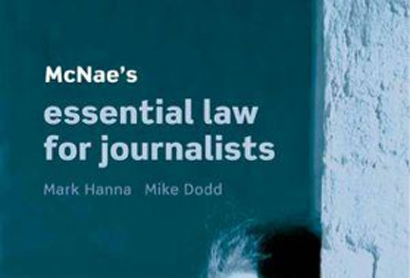
… new coverage of broadcast regulation; new material on privacy and the media, including injunctions and phone hacking; new guidance on journalists’ use of social media; and further coverage of online journalism issues.
The book is authored by Mark Hanna and Mike Dodd, the release adds, who “will present and discuss these changes with tutors at the seminar”.
Press Complaints Commission chairman Lord Hunt will give the keynote speech at the London-based media law seminar on 30 March. According to the NCTJ, he will be giving “his views on the Leveson inquiry and the future of press regulation”.
Hugh Tomlinson QC, counsel for Giggs, told the court that the footballer had been subject to “large scale breaches of the order by malign individuals”.
“The claimant’s name is in the public domain contrary to court orders,” he added. “The claimant has consented to the removal of the anonymity order completely.”
Mr Justice Tugendhat said: “Anonymity no longer applies and has not applied since 1 February.”
According to the Guardian, Mr Justice Tugendhat is considering “a claim by Giggs for damages for alleged misuse of private information by the Sun”.
Giggs is also seeking an injunction “to restrain future publication of private information”, according to the report.
The court heard that the anonymity order that prevented the media from naming Giggs was lifted on 1 February. However, an “administrative error” by Giggs’s solicitors meant the Sun was not informed.
The counsel for News Group Newspapers, the publisher of the Sun, reportedly told the court the injunction claim should be thrown out.
In the above clip, Kavanagh gives his most controversial interview of the day to BBC Radio 5 Live’s Richard Bacon, criticising both the police operation and News Corporation’s own investigation by its Management Standards Committee. “There’s never been a bigger crisis than this [at the Sun]“, Kavanagh tells Bacon.
Here’s the full transcript:
RB: “Trevor Kavanagh told me earlier about the atmosphere in the Sun news room.”
TK: “Well despondent I would say and a feeling of being under siege I suppose.”
RB: [paraphrase] Re: Rupert Murdoch planning to fly in later this week – will he face a hostile newsroom?
TK: “Well I think the newsroom is full of people who feel deeply unhappy about the way that their colleagues, who they worked alongside for sometimes decades and who they respect and admire as supremely professional operators, have ended up being arrested, searched, put on police bail and suspended from their duties and so there is a huge amount of anger at the fact that this has happened. And, as I would point out, not a single one of them has been charged, let alone tried or convicted.”
RB: “Do some people at the Sun feel as though their parent company has hung them out to dry a bit?”
TK: “Well there’s certainly a mood of unhappiness that the company’s proudly, certain parts of the company, not News International I hasten to add, not the newspaper side of the operation, are actually boasting that they’re sending information to the police which would put these people I’ve just described into police cells.”
RB: “Forgive me, I know the structure of the company is quite complex, when you refer to another bit of the company, what does that mean, what are you talking about?”
TK: “Well there is a parent company, News Corporation, and that has set up this management committee to look into the evidence, the documentary evidence and so on, if there is any, against any members of staff. Now I think it’s fair to say that we are not opposed to the fact, that we are co-operating with the police, that’s what we should be doing and I think that if we are to get through this we need to provide them with all the co-operation we can. I think that perhaps what we best do is if we left them go through the evidence and found out what they can.”
RB: “That word ‘boasting’, what do you mean by that?”
TK: “Well I meant that when the arrests were made it was made clear that they had been arrested on the basis of evidence provided by this management committee.”
RB: “Are you saying that they shouldn’t have provided that evidence, they should have let the police come for that evidence?”
TK: “Well I think that, I don’t know how it works frankly but it does make us feel, make people in the company feel, that evidence which as of far as we know, I have to point this out, that on the basis of the evidence that’s been suggested to those who have been arrested so far, is pretty flimsy stuff. I can’t describe it in any further detail than that but it doesn’t really stand close scrutiny and people are wondering what on earth is happening.”
RB: “A lot of the evidence has come from the parent company now. It gets complex because I know that a lot of emails have been handed over. These are emails that were thought to be missing and now have been recovered and there’s something like I think 11 million of them. When you say the evidence is flimsy are you saying you more or less know exactly what evidence the police have at the moment?”
TK: “No I don’t and I’m not going to go any further into what evidence may or may not be available.”
RB: “Why do you say it’s flimsy then if you don’t know?”
TK: “Well because I have been told what the police have been asking about and those, you see the people that have been arrested have been told why they have been arrested and on the basis of that I would say that the evidence is flimsy. What other evidence is about I simply don’t know but my point today is that this police operation is wildly disproportionate with what might be the potential offences that may or may not have been committed.”
RB: “How many police are involved in this investigation?”
TK: “You have 171 officers who are involved in three separate investigations and this is the biggest single police operation in the history of British policing. It is bigger than the operation on the Pan Am Lockerbie bombing, it’s far, far bigger, totally dwarfs the operation on Milly Dowler and nobody’s died, nobody’s committed any hideous offences that I’m aware of or even been suggested as having committed such offences. It does seem to me wildly disproportionate that these police officers are raiding people’s homes with up to 20 officers at a time, ransacking their homes, going through their personal possessions, carting off sacks of paper after a dawn raid. It’s completely out of proportion.”
RB: “Why do you think it’s got here, why do you think that the operation is on such a scale, is it partly about the police trying to recover their own reputation do you think?”
TK: “I suspect that’s the case, they feel that they’ve lost a police commissioner and a deputy police commissioner and they now want to make it abundantly clear that they aren’t going to leave a single stone, floorboard, drawer, cupboard, Kellogg’s cornflake packet or any other part of a household untouched in their hunt for evidence that may or may not exist.”
RB: “Do you think the investigation would be smaller if News International had been more co-operative with the initial phone-hacking allegations?”
TK: “Well that may or may not be the case but this is not the point, the point is that as we speak 30 journalists have been suspended from their jobs, their careers may have been ruined by this and their families have been shocked and appalled by dawn raids by people acting I think in a disproportionate way when I think a polite knock on the door, perhaps after a phone call, would have unearthed precisely the same so-called evidence. I don’t know whether it’s evidence or simply other pieces of paper that’s in every household.”
RB: “But when I say co-operative in the first place I think that’s an important point because initially the company said it was all down to one individual and that turned out not to be true and they misled parliament, they misled the public, then they said these 11 million emails had gone missing whilst being transferred to the Middle East and now 11 million have been recovered. But News International may have played its own part in the police investigation being of this scale.”
TK: “Well that’s for you to suggest and it’s…”
RB: “I don’t know that Trevor…”
TK: “Let me finish my sentence…”
RB: “OK”.
TK: “It may well be the case I don’t know, I’m not involved in any of that side of things and what you have to remember is that if indeed we were misjudging things or getting them wrong completely even, we have already paid a pretty heavy price for that have we not? We have had to close one of the biggest newspapers and the oldest and one of the best newspapers in the country and 300 excellent journalists have paid the price. Now, I think that we were talking earlier about the witch-hunt and I think that the view of those who are out to get us in this witch-hunt is that nothing will satisfy them until News International has gone altogether.”
RB: “Who are those people Trevor, who do you think really is out to get the company?”
TK: “Well I think one person quite clearly is Tom Watson, I don’t think he would deny it but I don’t want to go into any further detail about who… I mean you and others can easily decide who you think might fit the bill but when you have an operation as disproportionate as this you have to wonder what they’re up to, and why.”
RB: “And I guess just finally Trevor with the story about Rupert Murdoch flying back in this week to face his hostile newsroom do you think there is any chance at all that the Sun itself could go the way of the News of the World and get closed down?”
TK: “No. I think that the Sun is a paper that if it hadn’t been invented you would have to re-invent it then. I think that the fact is this is a great newspaper, it’s loved by millions, it’s even loved occasionally by the BBC. I think the idea of losing a paper of this sort would surely be the ultimate disproportionate act would it not?”
RB: “Mmm. It’s very successful as well isn’t it? It’s one of the few newspapers left that makes a lot of money I think as well.”
TK: “It is, it’s successful for a very good reason, it’s successful because it breaks great stories, it’s successful because it represents its readers’ interests. It’s successful because it has a vigour and a lifestyle and a life force which resonates through this country. It is the greatest newspaper in this country.”
RB: “By the way the journalists that were arrested, are they back at work?”
TK: “They’ve been suspended.”
RB: “Yeah, OK. Trevor, thank you…”
TK: “Indefinitely I have to say without any prospect of knowing when any further action is going to be taken, if any.”
RB: “Is that the right call by the Sun to suspend them or do you think that’s a bit harsh?”
TK: “Well I think that, I don’t think there’s much choice once this has happened but you know it’s hard for people like me who have worked alongside people we admire and respect for, in my case, nearly 40 years with the Sun, to see them languishing at home, frustrated and unable to do anything to defend themselves and I feel very sorry for them and I know it’s causing them and their families a great deal of anguish.”
RB: “I’m sure that’s right. I didn’t realise you’d been with the paper for 40 years, did you ever see the newspaper at a lower ebb than this, have you ever been through a bigger crisis than this at the Sun?”
TK: “There’s never been a bigger crisis than this.”
The court’s communications team were keen to have the account set up in time for the ruling in WikiLeaks founder Julian Assange’s extradition appeal, which is expected later this month.
The Twitter launch comes almost a year to the day since the Supreme Court gave the green light for journalists and other members of the public to use Twitter and email in the courtroom.