Browse > Home /

#Podcast: Getting started in data journalism

April 12th, 2013 | No Comments | Posted by in Data, Podcast
Image by Adikos on Flickr. Some rights reserved.

Image by Adikos on Flickr. Some rights reserved.

The ability to analyse and untangle datasets is a vital skill for journalists in the age of endless information, so this week’s podcast focuses on how to get started in data journalism.

Getting started in data journalism and getting further than the basics can seem like a mountain of programming tools and coding languages, but the experts we spoke to describe how to take the first steps.

  • Paul Bradshaw, online journalist, lecturer and blogger, Help Me Investigate.com
  • Marianne Bouchart, web producer and data journalism projects co-ordinator, Bloomberg News
  • Nicola Hughes, data journalist, Dataminer UK, 2011/12 Knight-Mozilla fellow at the Guardian, soon to join The Times

You can hear future podcasts by signing up to the Journalism.co.uk iTunes podcast feed.


Tags: , , , , , , ,

Similar posts:

#Tip: Watch these free data journalism tutorials

Image by Abron on Flickr. Some rights reserved

Image by Abron on Flickr. Some rights reserved

If you want to get started in data journalism, you might like to watch this series of videos.

There is a series of four free courses being run by kdmc at the Berkeley Graduate School of Journalism. And as they are online you don’t need to be in California to take part.

The final tutorial in the series takes place on Monday (you can register here), but you can also make the most of the seminar videos which are also at the above link.

There are tutorials on the following topics:

  • Spreadsheet basics
  • Introduction to data visualisation
  • Communicating with maps
  • Introduction to data mapping (which will run on Monday)

Journalism.co.uk offers data journalism training. We have one-day courses coming up in data visualisations, open data and an introduction to data journalism. See the full list at this link.

Tags: , , ,

Similar posts:

#Podcast – Career advice for aspiring sports journalists

February 22nd, 2013 | No Comments | Posted by in Podcast

This week’s podcast looks at sports journalism and gets expert advice on how to succeed.

Recommendations include the value of experience, getting the right training and other potential in-roads to this popular and competitive sector.

  • Sean Ingle, sports editor, Guardian.co.uk
  • Nick Powell, sports editor, Sky News
  • James Toney, managing editor, Sportsbeat
  • Keith Elliott, head of careers, Sports Journalists’ Association
  • Jonny Lally, media officer, Leicester City FC

You can hear future podcasts by signing up to the Journalism.co.uk iTunes podcast feed.

Tags: , , , , , , , ,

Similar posts:

#Podcast: What skills do journalists need in the newsroom of 2013?

January 4th, 2013 | No Comments | Posted by in Online Journalism, Podcast, Training
Toolbox

Image by Jen Durfey on Flickr. Some rights reserved

In this week’s Journalism.co.uk podcast technology editor Sarah Marshall speaks to key industry figures about the skills journalists need in today’s digital newsroom.

She speaks to:

  • Steve Herrmann, editor, BBC News Online
  • Alison Gow, editor of the Daily Post and DailyPost.co.uk, North Wales
  • Aron Pilhofer, editor of interactive news, New York Times
  • Mark Little, founder and chief executive of social news agency Storyful

The four share their advice on the skills needed, explaining why a journalist needs to be a jack of all trades, and tell us whether or not shorthand is still a required skill.

You can hear future podcasts by signing up to the Journalism.co.uk iTunes podcast feed.

Tags: , , , , ,

Similar posts:

Student summer blog: Initial pointers for other journalists-in-training

July 25th, 2012 | No Comments | Posted by in Online Journalism, Training


Image by Wiertz Sébastien on Flickr. Some rights reserved.

This is the first of a number of features over the summer break looking at the challenges that trainee journalists face and the opportunities that may present themselves.

Danny Roberts is a sports journalism student at Leeds Trinity University College and tweets from @DannyRoberts74. In the post below and others to follow in the coming weeks he hopes to help people, through his own experiences and those of professionals, to further their study and get that little bit closer to becoming a successful journalist.

What is the most daunting thing for a student journalist? Being told that ‘it is a tough business’, ‘you may not make it’ and ‘you aren’t going to make much money’.

What I think you must do first is reject the notion that you are destined to fail. No matter what anyone tells you, if you are driven then you can get the opportunities you want and deserve. In a field that requires experience more than a degree level qualification you need to put yourself out there and experience the world. The next thing you should do is realise that you can work as a journalist now.

People train as journalists for many different reasons, many people are born into the trade with a full book of contacts, some have always wanted to write for the public, whereas others just want to follow celebrities around all day. It doesn’t matter what aspect of journalism you wish to work in, the knowledge you must have rarely differs.

The first thing I was taught about journalism was ‘read the news’. Whether you read the news online or buy a daily newspaper, it is important to know what is going on in the world around you. If you go into a job or placement interview in the future and they mention the news and you go silent, it isn’t a good first impression. It doesn’t matter if you don’t intend to go into news writing or not, being an avid reader of all things news helps you to further progress as a journalist.

Having a contact book is the next step on your way to success. It is never too early to start building relationships with people and companies from all walks of life, as you never know when you will need a quote or story from these contacts. This could be a ‘little black book’ or a huge pad, either way get them written down. You could use your phone to add these contacts to, but it is always a good idea to have a paper copy because phones can be so easily damaged or lost.

If you haven’t already, pick a specific aspect of journalism. Of course it may be good to be flexible and know a bit about each, but having a niche topic to write about will help your chances of becoming accepted and excelling as a journalist in your chosen field. To add to this idea, if you don’t have a specific field you should always remain open to different experiences and challenges as you never know what might take your fancy.

What else can you do? Start to hone your communication skills, learn to use the phone as well as email (they have to reply if you are speaking to them live), be open to rejections, read pieces by your favourite writers, don’t be afraid to ask questions, pitch ideas to editors, the list is endless.

Over the next few months, this blog will help to share experiences and offer advice and support to other trainee journalists.

Tags: ,

Similar posts:

Data, Twitter, blogging and more: 20 short courses for journalists

July 18th, 2012 | No Comments | Posted by in Training

Journalism.co.uk runs training courses for experienced journalists wanting to boost their skills.

Click the links for more information.

Out of thin air: How to find hundreds of new ideas every day (for freelancers)
Evening course, 26 July, led by Ellie Levenson, cost: £95 (+VAT)

Media law refresher
One-day course,: 3 September, led by David Banks, cost: £200 (+VAT)

Introduction to data journalism
One-day course, 11 September, led by: Paul Bradshaw, cost: £225 (+VAT)

Intermediate data journalism
One-day course, 13 September, led by: Paul Bradshaw, cost: £225 (+VAT)

Advanced online research skills
One-day course, 12 September, led by Colin Meek, cost: £200 (+VAT)

Liveblogging – details coming soon
Evening course, 12 September, led by Adam Tinworth, cost: £95 (+VAT)

Online sub-editing
One-day course, 17 September, led by Emmanuelle Smith and Jane Wild, cost: £200 (+VAT)

Online video journalism
One-day course, 19 September, led by Adam Westbrook, cost: £250 (+VAT)

SEO for journalists
One-day course, 20 September, led by: Adam Tinworth, cost: £200 (+VAT)

CV and interview clinic: Get that journalism job
One-day course, 21 September, led by Daniell Morrisey and Clare Davies, cost: £200 (+VAT)

Successful freelance journalism
One-day course, (Saturday) 22 September, led by Olivia Gordon and Johanna Payton, cost: £200 (+VAT)

Online media law
One-day course, 24 September, led by: David Banks, cost: £200 (+VAT)

Your social media toolbox
Evening course, date: 25 September, led by: Sue Llewellyn,  cost: £95 (+VAT)

Essential Twitter skills
Half-day course, 4 October, led by: Sue Llewellyn, cost: £125 (+VAT)

Advanced Twitter skills
Half-day course, 5 October, led by Sue Llewellyn, cost: £125 (+VAT)

Improve your blogging
Evening course, 10 October, led by Martin Belam, cost: £95 (+VAT)

Get published! How to write a (non-fiction) book proposal
One-day course , 12 October, led by Gill Hasson, cost: £200 (+VAT)

Adding a second string to the freelancer’s bow
Evening course, 17 October, led by Steve Bustin, cost: £95 (+VAT)

Data visualisations
One-day course,  7 November, led by Paul Bradshaw and Caroline Beavon, cost: £225 (+VAT)

Stiletto bootcamp: Writing for women’s magazines
Six-weeks online course, starting 1 October (flexible), led by Tiffany Wright, cost: £250

We believe in small group training courses. All courses have a maximum of 10 attendees.

We can also arrange in-house training.

Please email me using this link if you have any questions.

Tags:

Similar posts:

#Tip of the day from Journalism.co.uk – training journalists in social media

On Poynter Mallary Jean Tenore runs through some tips for those working in journalism and social media training, from training style to the resources you make available to trainees.

Read the full post here.

Tipster: Rachel McAthy

If you have a tip you would like to submit to us at Journalism.co.uk email us using this link– we will pay a fiver for the best ones published.

Tags: , , , ,

Similar posts:

Guardian considering ‘becoming involved’ in journalism training

April 10th, 2012 | No Comments | Posted by in Journalism, Training

The Guardian has confirmed it is in conversations with a number of universities “about the possibility of becoming involved with their journalism courses”.

The development was first reported by XCity magazine, City University London’s student newspaper, in its latest edition.

XCity understands that the annual course fee could be around £9,000.

In a statement today a Guardian spokesperson added:

No decisions have been made about the precise nature of the course, or even which partner in education would work best with us. It is therefore not possible to say when a course might start or to give any detail on how it might be run.

Tags: , ,

Similar posts:

New one-day training courses from Journalism.co.uk

March 29th, 2012 | No Comments | Posted by in About us, Training

Journalism.co.uk runs a range of training courses to help boost your skills in a particular area of journalism.

Here is a list of the training courses we are running this spring. We will be adding more soon.

Successful freelance journalism

  • Date: 2 May
  • Tutors: Olivia Gordon and Jo Payton

Do you want to know how to get off the ground as a freelance writer and build a successful business? Led by two experienced and in-demand journalists, this course on how to be a successful freelance journalist will help anyone thinking of working as a freelance journalist, as well as new freelancers, or those who are already working in the field but want a refresher to up their game.

Advanced online research skills

  • Date: 3 May
  • Tutor: Colin Meek

An intensive course covering quick tips for slicker working and a range of other investigative techniques and strategies for taking your desk research to the next level.

Online sub-editing

  • Date: 4 May
  • Tutors: Emmanuelle Smith and Jane Wild

Whether you’re a print sub-editor looking to update your skills and transfer them to the web, or looking for that first job in online journalism, you will benefit from this one-day course. As the media and the way in which readers consume it evolve, multi-skilled journalists who can produce great copy for the web are more in demand than ever.

An introduction to data journalism*

  • Date: 9 May or 28 May
  • Tutor: Kevin Anderson

As governments and institutions release more data, complex numbers have become an important part of many stories. Data journalism is now a skill that can set you apart in a competitive job market.

*This is the last time we will be offering this course led by Kevin Anderson due to his commitments – so take advantage of the final opportunity to learn from this former BBC and Guardian data journalist.

Intermediate data journalism

  • Date: 29 May
  • Tutor: Kevin Anderson

Now that you know the basics about data journalism, get ready to take your skills to the next level. You’ll leave the course with more confidence on how to tame data, make more powerful visualisations and build stronger cases from your investigative reporting.

Media law refresher

  • Date: 21 May
  • Tutor: David Banks

A one-day course offering an update on key aspects of media law that can affect anyone publishing in the UK.

It covers areas such as libel, contempt, reporting the courts, sexual offences, children, privacy and confidentiality and copyright.

The course includes updates on the legal areas being explored by the Leveson inquiry, such as Bribery Act, RIPA, Data Protection Act and Misuse of Computers Act.

Online media law

  • Date: 11 June
  • Tutor: David Banks

A course that focuses on the media law that particularly affects those working in new media.

The course covers libel, contempt, privacy and confidentiality, copyright, Data Protection Act and Misuse of Computers Act with special reference to cases affecting those working online.

Adding a second string to your bow

  • Date: 23 May (evening)
  • Tutor: Steve Bustin

Times are tough for freelance journalists, with increasing numbers of writers chasing a decreasing number of commissions, leaving many facing a reduced income.

This course examines ways to boost your income by developing a ‘second string to your bow’, developing and selling other services such as corporate copywriting, PR services and paid public speaking.

How to set up a hyperlocal news site

  • Date: 28 May
  • Tutor: Philip John

Want to get a head start in the exciting new world of hyperlocal journalism? This course will guide you through the process, from inception to sustainability. You’ll learn about using the right mix of technology, how to encourage contributions and marketing on a tiny budget, plus we’ll cover the unique set of issues facing hyperlocal sites.

To suggest a course or find out more email me using this link or call 01273 384291.

Tags:

Similar posts:

Media release: New edition of McNae’s to launch at NCTJ seminar

February 22nd, 2012 | 1 Comment | Posted by in Legal, Training

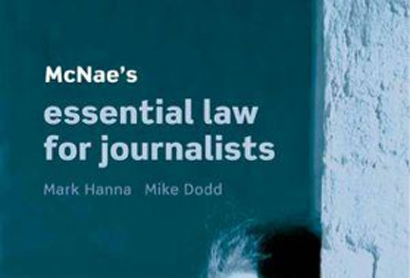
The 21st edition of McNae’s Essential Law for Journalists will be launched next month, at the NCTJ’s media law seminar.

According to a release from the NCTJ, the new edition of the media law book includes a further look at issues such as:

… new coverage of broadcast regulation; new material on privacy and the media, including injunctions and phone hacking; new guidance on journalists’ use of social media; and further coverage of online journalism issues.

The book is authored by Mark Hanna and Mike Dodd, the release adds, who “will present and discuss these changes with tutors at the seminar”.

Press Complaints Commission chairman Lord Hunt will give the keynote speech at the London-based media law seminar on 30 March. According to the NCTJ, he will be giving “his views on the Leveson inquiry and the future of press regulation”.

Tags: , , , ,

Similar posts:

© Mousetrap Media Ltd. Theme: modified version of Statement