Browse > Home /

#Tip: Pointers for growing your Twitter following

While it may not all be about quantity, journalists and news outlets alike are undoubtedly keen to grow a large, and engaged community on social networks with which to share and discuss their content. This how-to by David Beard on the Poynter Institute website runs through  a list of “eight ways to attract more Twitter followers” looking at both the content being tweeted as well as the way the tweet itself is constructed.

If you have a tip you would like to submit to us at Journalism.co.uk email us using this link.

Tags: , , , , ,

Similar posts:

#Podcast: How news outlets use live Q&As to engage the audience

January 25th, 2013 | No Comments | Posted by in Podcast
Image by petesimon on Flickr. Some rights reserved

Image by petesimon on Flickr. Some rights reserved

News outlets and journalists have taken to a number of different platforms to host live Q&A chats with their community; from Twitter and Google+ Hangouts, to Quora and Reddit, as well as on their own websites using liveblogs or the article comment facility.

Just last week, for example, the Daily Post in North Wales launched a new weekly liveblog Q&A, which will feature a different expert each week who will answer questions on a given subject.

In this week’s podcast we look at some of the different approaches to live text-based Q&As and panel chats taken by news outlets and individual journalists, as well as gather some useful tips for running a successful Q&A.

We hear from:

  • Mark Luckie, manager of journalism and news, Twitter
  • Chris Hamilton, social media editor, BBC News
  • Tom Standage, digital editor, the Economist
  • Kate Hodge, senior content co-ordinator, Guardian Careers

There are also a number of journalism-related Twitter chats run on a regular basis. Here is a list of 50 which may be of interest, compiled by OnlineUniversities.com.

Tags: , , , , , ,

Similar posts:

#Tip of the day for journalists – Getting the community involved

January 16th, 2013 | No Comments | Posted by in Top tips for journalists
Image by James Cridland on Flickr. Some rights reserved.

Image by James Cridland on Flickr. Some rights reserved.

Managing director of Talk About Local Sarah Hartley shares some of her own tips, and gathers opinion for those behind hyperlocal sites, on how local news sites can get the community involved in editorial.

If you have a tip you would like to submit to us at Journalism.co.uk email us using this link.

Tags: , , ,

Similar posts:

#Tip of the day from Journalism.co.uk – building communities and traffic

August 22nd, 2012 | No Comments | Posted by in Top tips for journalists, Traffic

On the Reynolds Center for Business Journalism site Maria Perez outlines some of the key takeaways from s session at the BlogWorld & New Media Expo about “strategies for creating and building a community people will participate in”.

In a post she gathers together some of the pointers shared on growing a community and building up traffic.

Tipster: Rachel McAthy

If you have a tip you would like to submit to us at Journalism.co.uk email us using this link.

Tags: , , ,

Similar posts:

Digital First Media’s first mobile community newsroom takes to the road

July 30th, 2012 | No Comments | Posted by in Citizen journalism, Training

Digital First Media has launched the first of its new “mobile community media labs”, one of a number of community news projects to be launched by titles within the company.

Journalism.co.uk reported last month about the four new mobile labs, including “pop-up newsrooms”, to be introduced. They are being run by the San Jose Mercury News, the St Paul Pioneer Press, the York Daily Record and the New Haven Register.

The first, TCRover, was launched on Friday by St Paul Pioneer Press, described in a press release as “a modified Ford Transit Connect wrapped with TwinCities.com and Pioneer Press branding” and “outfitted with WiFi, a generator, awning, chairs and a pull-down projection screen”.

Digital First Media’s Steve Buttry said in the release:

The Twin Cities are the perfect location for a mobile community newsroom. This is a sprawling metro area with two hubs, dozens of widely varying suburban communities and several shared interests, such as the sports teams.

With the TCRover, the TwinCities.com staff will be able to engage people where they live and work.

Digital First Media travelling in the van will teach the community skills such as “how to blog, how to interact with our site, even how to do research on topics that interest them”, the release adds.

The adventures of the mobile community newsrooms can be followed on Twitter @TCRover.

Tags: , ,

Similar posts:

#PPAconf: Why cover design matters for the Big Issue

May 10th, 2012 | 1 Comment | Posted by in Events, Magazines

In the past year, the Big Issue has changed dramatically, regaining its reputation as a “magazine with teeth”, according to editor Paul McNamee.

Speaking at yesterday’s PPA conference in London, he said: “We are a very different magazine than we were a year ago and a radically different magazine from 24 months ago.”

The Big Issue has seen big changes since it teamed up with Dennis Publishing. With editorial now run from Glasgow and one national edition of the magazine, McNamee concentrated on  “the four Cs”, cover, content, columnists and community, to give the magazine some bite.

He told delegates: “The cover was the most important. [A bold cover] could attract a lot of attention and make a lot of noise.

“We had to find a way to find our own space again.”

Simplifying the cover’s design to one element, McNamee showed the delegates how the front page was markedly different to what it was before the magazine’s relaunch. He said: “[The cover has] one, single element to it every week that has power and impact and something to say.”

Along with enlisting footballer Joey Barton as a columnist and strengthening the magazine’s relationship with its vendors, McNamee said he believed the end product is something which will stand the test of time.

“We’ve been going for 21 years now – hopefully, we’ll be around for another few yet.”

Tags: , , , , , , , , , , , , ,

Similar posts:

#jpod – Crowdfunding for journalism: is it working?

In the past few years a number of projects have cropped up which are trying to use crowdfunding as one mean to finance individual journalism pitches as well as journalism-related companies.

In this week’s podcast we speak to those who have ‘been there, done that, got the t-shirt’ when it comes to crowdsourcing revenues and can share the lessons learned along the way, as well as hearing from those taking their first steps on this path.

Interviewees included in the podcast are:

  • David Cohn, founder, Spot.Us
  • Bobbie Johnson, co-founder, Matter
  • Henry Peirse, founder and CEO, GRN
  • Karim Ben Khelifa, co-founder and CEO, Emphas.is
  • Rachel Howells, director, Local News South Wales/Port Talbot MagNet

For some background reading you can see more about the launch of Emphas.is last year at this link, as well as the launch of Matter just last month. GRN has also blogged about the launch of Matter on its website.

Journalism.co.uk has also reported on Port Talbot’s crowdfunding ventures with Pitch-in! at this link.

You can hear future podcasts by signing up to the Journalism.co.uk iTunes podcast feed.

Tags: , , ,

Similar posts:

Mail Online publisher: ‘If you don’t listen to your users then you’re dead’

January 24th, 2012 | No Comments | Posted by in Editors' pick, Online Journalism

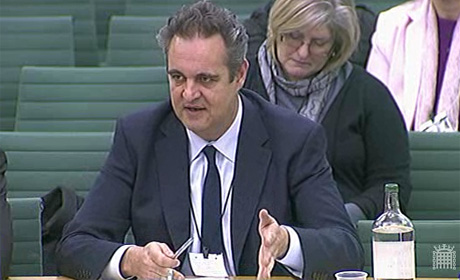
Appearing before the joint committee on privacy and injunctions yesterday, Martin Clarke, the publisher of Daily Mail website Mail Online, shared some interesting comments on digital media, in reference to privacy, regulation and general approaches to journalism in a digital world.

The latest results from the Audit Bureau of Circulation (published in December) showed the Mail Online continued its lead ahead of other audited UK news sites with almost 85 million unique browsers in November.

So here is a collection of thoughts shared by Clarke before the committee on issues relating to the impact of the internet on the news industry:

Privacy:

If we were publishing really unpleasant, intrusive stuff our readers wouldn’t like it. One of the beauties of the internet is the feedback you get from your readers is pretty much instant in two ways.

First of all, you can see in real time who’s reading what stories on your homepage … that immediately tells me which ones they’re interested in.

Secondly, we have the comments facility and readers aren’t slow to let us know when they think we’ve been unfair or unpleasant. Quite often I’ve changed tack on a story, or the headline on a story or dropped a picture because of things readers have left in comments. That’s the beauty of the internet, the interaction between you and your readers is that much more immediate. If there were no privacy law no I don’t think it would make that much difference.

Regulation

You are dealing with an industry that faces big commercial challenges going forward. Digital is how newspapers are going to have to make their living, the economics of the internet are such you probably have to make big chunk of that living abroad. Any further regulation might compromise that, and then quite frankly we won’t really have an industry left to regulate.

… You think of the internet in chunks, press, bloggers, tweeters, but from the consumers point of view that’s not how they consider it. It’s an endless continuous spectrum that starts with what their friends are saying on their Facebook pages, what some tweeter might be saying, to a story they link to in a tweet, then go back on to Facebook page and comment … Pretty soon all those commenting systems are going to be bolted together. Where do you draw the line, where do you say right this bit of the internet is going to be regulated and this bit isn’t?

… We’ve had to wake up and deal, embrace a new reality … The internet is a great way to distribute news, it means newspapers are now back in the business of breaking news … alongside TV and radio and the people who had taken that privilege away from us. It’s gratifying as a journalist to be part of that. Equally it’s brought some negatives …. You can’t turn back the tide, we can’t say stop the internet world we want to get off.

On content:

The reason it’s different from the Daily Mail is because it’s a different market … I’m operating in a digital market where we do get feedback from the readers, I can see in real time what they’re really reading rather than what I might think as journalist they should be reading. In the digital world if you don’t listen to your users, if you don’t involve them, if you don’t listen to their tastes, than you’re dead. We don’t follow that data slavishly, that’s where I come in, it’s my job to mediate the light and the shade. So that’s why it’s different from the Mail.

Equally we do more showbiz…we do vastly more science, we do more political commentary, we do more foreign news because we’re not limited by physical space … It goes back to the point I made right at the beginning, if you’re going for scale you can’t just fit in a niche. You can’t say “we’ll be in the red-top end, or the middle-market or the broadsheet end”. Niches aren’t big enough on the internet to survive, so you have to be a much broader church.

You can watch the session in full on Parliament TV and hear from others who appeared before the committee, including Edward Roussel, digital editor of the Telegraph Media Group and Phillip Webster, editor of Times Online.

Tags: , , , , ,

Similar posts:

Guardian’s n0tice launches advertising platform

December 12th, 2011 | No Comments | Posted by in Hyperlocal, Local media

New online noticeboard, n0tice, which is owned by the Guardian Media Group, today announced the launch of an advertising platform which will enable noticeboard owners to earn revenue.

According to a post on the site, which also enables community groups, individuals, hyperlocals and bloggers to post announcements, event information and local news, noticeboard “owners” can now “earn revenue by selling featured positions for classified listings or ‘offers’.”

Outlining the model n0tice says owners will take an 85 per cent revenue cut, while the platform gets the remaining 15 per cent.

Posting an offer on a noticeboard is self-serve and free for n0tice participants. Offers can then be upgraded to a Featured placement for £1/day (or the equivalent base-level regional currency). Featured positioning includes both a visual enhancement and priority ranking on the page.

Alongside the new revenue platform, n0tice also announced the addition of other new features in today’s post, including geoRSS and the ability for each user to have a number of noticeboards.

Read more on n0tice here.

Tags: , , ,

Similar posts:

#news2011: Editors urged to focus on ‘conversation’ and ‘try everything’

November 28th, 2011 | No Comments | Posted by in Events, Journalism, Online Journalism

In the first panel session of the Global Editors Network summit in Hong Kong today, which looked at the impact of personalisation and “pro-sumption”, the overriding theme was for media companies to focus on a two-way conversation in order to meet the needs of their consumers.

Dan Gillmor, director of the Knight Center for Entrepreneurial Journalism in the US, described the ecosystem as “more diverse”, adding that news outlets need to change their attitude “from knowing everything, or pretending to know everything, and imagining their role as more of a guide”.

He cited the Guardian’s open newslist project as an example of community engagement which makes “perfect sense”, but later added that the involvement of the audience in journalism would need to differ based on the specific case or project.

In some cases the audience can vote and make decisions and in other cases they will be part of the process in a different way and in some cases journalists will do the job they are trained to do and then get things from the audience. There are many ways to get the audience into this process. Not all are co-decisions but collaboration in a variety of ways.

He also called on editors to engage in a conversation with those working outside the journalism sphere, urging them to “be very willing to use ideas from people not involved in journalism”.

Fellow panel member Robert Amlung, head of digital strategy at ZDF TV in Germany, also spoke of the importance of community involvement and the development of the conversation in television specifically to a two-way process.

I do trust the audience … We’re not letting the audience decide then dictate. As journalists we have our position, our ethics, all this we bring to the conversation and this will enrich the conversation and I still think journalists have something to contribute. It’s two-way, we will get something back. We get more feedback and when we do it right it will enhance quality.

During his presentation he discussed the array of platforms now being used to access content, but added that while there are these new windows for content to be seen through, “the old world” and its communities must not be forgotten.

New possibilities arise but the old world remains strong. Classical traditional media is still very much used … even newspapers are quite profitable today. It would be nonsense to talk about the demise of other media.

Tags: , , ,

Similar posts:

© Mousetrap Media Ltd. Theme: modified version of Statement