Browse > Home / Archive by category 'Local media'

Q&A with hyperlocal site boasting 15,000 newsletter subscribers

ChiswickW4.com, which claimed 50,000 unique visitors during January, has just gained it’s 15,000th email newsletter signup.

Launched by the Neighbour Net group in 2000 to cover the W4 postcode area of London, Neighbour Net now boasts a portfolio of nine other hyperlocal sites in London, including EalingToday.co.uk and PutneySW15.com.

One of Neighbour Net’s directors, Sean Kelly, spoke to Journalism.co.uk about the site’s model.

Who’s behind the operation of the website? What inspired you to set up a hyperlocal site?

The site was set up by Tony Steele and Sean Kelly who both live in the Chiswick area. The aim was to fill the gap in local news provision initially in Chiswick and then extend the concept out to other areas.

Are your articles written by local contributors or do you have a dedicated team?

We have a dedicated editor for each site and a significant number of other local contributors in each area. The contributions tend to be reviews – restaurants, concerts, theatre. There is also a central office resource for content production which can write stories when the editor is away.

Is anyone employed to work full-time on the site?

Yes, we have four full-time staff but that includes sales and back office. The aim on ChiswickW4.com is to be able to respond 24/7 to breaking news.

Your site has a number of subtle advertisements – could you tell us a little about your business model?

Nearly all our customers are small local businesses and they either have advertising packages which include banner display and newsletter inclusion or listings in our directories.

We also like to be supportive of local independent businesses and like to write positive stories about them. Obviously we are more inclined to cover items about our clients but often feature non-clients as well.

Do you have a social media strategy? If so, what social networks do you use and how do you use them?

We put all our news content out on Twitter and Facebook as well as some aggregated feeds with local offers, events, jobs and traffic reports. The main use for us of social media is sourcing stories rather than broadcasting. It is particularly powerful for breaking news.

We try and follow as many people as possible who live in the area to ensure that if something is kicking off locally we hear about it quickly.

Why did you go down the newsletter route, rather than taking a different approach?

Probably because in 2000 there weren’t really many alternatives but e-mail newsletters have proven to be the most effective broadcast method ever since.

On a proportional basis they still deliver the highest level of response both for advertisers and in terms of click through to news items.

How does your traffic for the Chiswick site compare with the rest of Neighbour Net’s sites?

It makes up around 50 per cent of group total over the course of a typical month. On exceptional days sites like PutneySW15.com and EalingToday.co.uk can exceed Chiswick’s traffic.

Do you have any plans to roll out new features on the sites?

The plan is to increase the amount of user contributed content further although the editor will remain central to the story production process.

Are you planning to expand? If so, where to?

We normally expand contiguously so that people in the area may be familiar with the site and we can cross-sell to existing clients as well as provide editorial support from neighbouring sites.

The most important determinant of where we launch is finding a suitably high quality editor. The plan is to recruit more actively once the content management system is up and running.

ChiswickW4.com can be found on Twitter as @ChiswickW4.

Tags: , , , ,

Similar posts:

Regional Press Awards add new category for best editor

February 15th, 2012 | No Comments | Posted by in Awards, Local media, Newspapers

The Society of Editors has added a new category to this year’s Regional Press Awards – for editor of the year.

Entries for the awards, which celebrate the best of British regional newspaper journalism, are now open at www.theregionalpressawards.org.uk

The Society of Editors said today, in a release:

The new editor’s award will recognise the editor of a daily or weekly regional newspaper who can demonstrate either personal journalistic achievement in the public interest, leadership, a personally fronted campaign, an individual battle with authority or simply a great idea. Editors can nominate themselves or can be nominated by senior editorial colleagues.

The closing date is 7 March, the shortlists will be published on 17 April and the ceremony is on 25 May.

Similar posts:

Essex hyperlocal website teams up with Archant to launch magazine

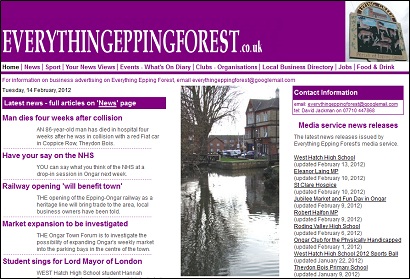
A hyperlocal website in Essex has teamed up with regional newspaper publisher Archant to launch a print edition.

EverythingEppingForest.co.uk, which was founded in 2008 by local journalist David Jackman, will bring out the glossy monthly magazine from next month.

Printed by Archant, it will be delivered to 10,000 homes in the area and will include local community news and information, events and advertising.

In a statement published on the Everything Epping Forest website (not directly linkable – scroll down), Archant London commercial director Tony Little said: “We are delighted to have set up this partnership with David who is a much-respected local journalist, with important contacts in the local area.

“His success with Everything Epping Forest should be applauded and we are delighted to get involved with such a successful community-focused initiative.”

Tags: , , ,

Similar posts:

Guardian’s n0tice launches advertising platform

December 12th, 2011 | No Comments | Posted by in Hyperlocal, Local media

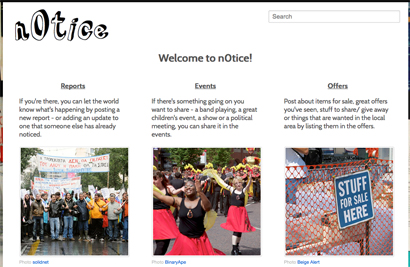
New online noticeboard, n0tice, which is owned by the Guardian Media Group, today announced the launch of an advertising platform which will enable noticeboard owners to earn revenue.

According to a post on the site, which also enables community groups, individuals, hyperlocals and bloggers to post announcements, event information and local news, noticeboard “owners” can now “earn revenue by selling featured positions for classified listings or ‘offers’.”

Outlining the model n0tice says owners will take an 85 per cent revenue cut, while the platform gets the remaining 15 per cent.

Posting an offer on a noticeboard is self-serve and free for n0tice participants. Offers can then be upgraded to a Featured placement for £1/day (or the equivalent base-level regional currency). Featured positioning includes both a visual enhancement and priority ranking on the page.

Alongside the new revenue platform, n0tice also announced the addition of other new features in today’s post, including geoRSS and the ability for each user to have a number of noticeboards.

Read more on n0tice here.

Tags: , , ,

Similar posts:

Hyperlocals can now create noticeboards using the Guardian’s n0tice

Online noticeboard n0tice has today opened to all community groups and hyperlocal sites after testing the technology with a limited number of users.

Groups can now create their own customised page, choosing a domain and can start to moderate activity. The platform is still being developed but there are plans to later introduce revenue-sharing between n0tice, owned by the Guardian Media Group, and page owners, such as hyperlocal news sites and bloggers.

notice is like a cross between a village noticeboard, Gumtree and Foursquare in that it is a space for users to post small ads, local news and announcements and that information can be pushed to location-enabled mobile phones and devices. There is more on how and why n0tice was created at this link and how it will make money by charging users for promoted, location-based small ads.

Following a recent invitation roll-out, hyperlocals, bloggers and community groups can now create their n0tice page, measure performance and activity with social analytics tools, and “moderate community activity in order to encourage the kind of behaviour they want to see on their noticeboard”, Sarah Hartley, one of the team behind n0tice told Journalism.co.uk.

She added:

This service is designed to serve community groups of all shapes and sizes, active local champions and community leaders, local publishers and bloggers, interest groups and hobbyists, and anyone who wants to manage a community noticeboard. We are focused on serving UK-based community groups, but it works anywhere in the world.

The service is still in development, and we have a lot we plan to add in the near future.

For example, we will develop revenue sharing opportunities via the classified advertising platform so that noticeboard owners can earn money. We will also develop a private, restricted access community noticeboard service which will be offered for a fee.

We don’t have a date when these services will be launched, but we release new capabilities on a regular basis.  You can follow @n0tice to stay in touch with the team.

Access to n0tice.com is open, but community participation is currently by invitation only. There are details on the technologies used to create n0tice here.

Tags: , , , , ,

Similar posts:

#wef11 audio: Jim Brady of Journal Register Company talks open newsrooms

October 13th, 2011 | No Comments | Posted by in Events, Journalism, Local media, Newspapers

During the building communities session at the World Editors Forum in Vienna today, editor-in-chief of the Journal Register Company Jim Brady discussed a number of ways in which you can build communities and importantly, greater engagement with your audience.

One of the ways is through opening up the newsroom, referring to the Register Citizen in Torrington, which opened up a newsroom cafe open to the public at the end of last year.

Members of the community are welcome to get involved either virtually, such as by attending news meetings via Skype or physcially by coming into the newsroom to talk to reporters over a coffee.

I spoke to Jim at the end of the session to find out more about the project, and how it has developed in its first year.

Jim Brady, Journal Register Company by journalismnews

Another member of the panel, Anette Novak, editor-in-chief of Norran in Sweden, also discussed a similar project they run online, called eEditor, which you can find more on here. There will be more tips on building communities from the World Editors Forum session on Journalism.co.uk tomorrow.

The topic of enhancing community engagement was also discussed at Journalism.co.uk’s own event news:rewired, which took place in London last week. You can see a liveblog of that session here, and a copy of the presentations from those speakers is available at this link.

Tags: , , , , , ,

Similar posts:

Paperboy app: Take a photo of newspaper article to find the digital edition

An app which uses image recognition technology to allow a reader to take a photo of a newspaper or magazine story on an iPhone or Android phone and use it to search for the digital article will be launched for UK titles next month.

Kooaba, the company behind the Paperboy app, has partnered with NewspaperDirect to enable print to digital linking for 2,000 titles worldwide. Around 50 UK titles are available digitally via NewspaperDirect and are therefore likely to be the publications available via the app. The full list includes the Daily Telegraph, Financial Times and Daily Mail, plus regional newspapers such as the Kentish Gazette, Birmingham Mail and Evening Standard.

In addition to taking a photo on a phone and using image recognition on the text to find the digital article, newspapers can also print a link which app users can snap to lead them to additional multimedia content, such as video.

The roll-out of the ability to find digital from print using the Paperboy app has started with this list of newspapers based in Germany, Austria and Switzerland and is planning add UK titles in November.

The Kooaba blog explains how the technology works.

Paperboy connects printed media to the digital world with one click: All the application’s powerful image recognition technology needs is a photo taken by a smartphone camera of an article or page in a newspaper or magazine. Paperboy then matches the photo to the images in Kooaba’s sizeable library of printed media or identifies that page or article from NewspaperDirect’s inventory of over 2,000 same-day, digital newspapers replicas. Users can then share, email or archive the electronic version on the go, anywhere, anytime or explore related information like videos, images or links to selected topics. Paperboy automatically finds URLs on pages of print publications. In some publications, exclusive Paperboy content is for pages with the Shutter icon.

This video gives examples of how readers could find it useful, such as taking a photo of a recipe to locate the digital version, which could then be saved to Evernote or shared via Twitter.

Tags: , , , ,

Similar posts:

Media accreditation process open for Paralympic Games

September 22nd, 2011 | No Comments | Posted by in Local media, Newspapers

The Newspaper Society issued a reminder this morning that media accreditation has now opened for the Paralympic Games. The first stage of the process, called Press by Number, opened earlier this month and media organisations have until 28 November to complete a document to indicate how many people they would to request accreditation for.

There are more details and documentation at the British Paralympic Association website. Successful media organisations will be contacted early next year to progress their applications to the second stage.

The NS adds that it is currently working with regional and local newspapers and the British Olympic Association (BOA) to put in place a regional press pool for the Olympic Games, which runs a separate accreditation process.

The Olympic Games process has come in for some criticism in recent weeks after it emerged many local London papers have not yet been approved despite certain aspects of the games taking place on their patch.

The NS reports that the minister for sport and the Olympics Hugh Robertson said he would write to the BOA about the matter after being questioned by MPs, but said it was “massively oversubscribed”.

He added: “There will be a level of public interest that I do not think we have remotely started to get our minds around. Spots will be tight, but I will absolutely do all that I can.

“There is a possible second channel for non-accredited media, and considerable provision is being made for those who cannot get formally accredited. The mayor of London has done an enormous amount to help that take place.”

Under the pooling system titles would be able to share material on the Games.

Tags: , , , , ,

Similar posts:

Newsquest editor owns up to writing death penalty editorial

Earlier today I spoke to group editor of Newsquest’s South London titles, Andy Parkes, who refused to confirm whether or not he had penned an editorial printed by the Wimbledon Guardian and Streatham Guardian calling for the return of the death penalty and corporal punishment.

Parkes did say that we could “put his name to it”,  claiming that it was “tongue in cheek” and a “just a bit of fun”.

The piece – and Parkes subsequent comments to Journalism.co.uk – proved to be controversial however and he was asked to appear on BBC Radio Scotland this afternoon alongside Guardian blogger Roy Greenslade, who first blogged about the editorial.

Parkes admitted on the show to writing the leader, and said that he stands by the call for the death penalty and corporal punishment to be reinstated.

Tags: , , , , , ,

Similar posts:

Editorial in Newsquest papers calling for capital punishment ‘was just a bit of fun’

An unsigned editorial that appeared on the pages of the Streatham Guardian and Wimbledon Guardian calling for the return of capital punishment does not represent the views of publisher Newsquest and was “just a bit of fun”, the papers’ group editor said this morning.

Speaking to Journalism.co.uk, Andy Parkes denied the editorials represented the views of Newsquest or Newsquest’s parent company, Gannett.

Parkes said the piece was “tongue in cheek” and “a bit of fun”, and had been “blown out of all proportion” in a post by the Guardian’s Roy Greenslade this morning, which initially claimed that the piece had been run across Newsquest’s South London Guardian series and elsewhere.

Parkes refused to comment on who wrote the piece at first, but later said: “You can put my name to it”. Pressed over whether he was the author, he refused to say any more, adding: “I absolutely don’t want to get into this any further”.

The hard-line leading articles – one of which was headlined simply “Rioting scum: the solution is as simple as 1, 2, 3″ – call for capital and corporal punishment to be brought back in the wake of the recent rioting and looting.

The full comment reads:

RIOTING SCUM – the solution is as simple as 1,2,3.

1 Bring back corporal punishment.

2 Bring back capital punishment.

3 Throw out all the stupid namby-pamby laws and regulations which actually stop adults interacting with children.

The first two are so blindingly obvious no more needs to be said.

The third is equally sensible – allow parents to discipline their offspring as they need to, put power back into the hands of teachers and actually encourage, not discourage, adults to be involved with children.

Personally I’d ditch CRB checks altogether – after all, if you use points 1 and 2 correctly they would be far more effective than any CRB check could ever be. And, as for the suggestion an adult shouldn’t be allowed to carry other people’s children in the car… blah, blah, blah unbelievable. It’s no wonder adults are are terrified to get involved. I heard the other day that teachers are now discouraged from even raising their voices – the world’s gone mad.

Of course, if you’re looking for a more radical solution. One idea would be to simply arm pensioners. On the same day you get your bus pass you receive a handgun and the legal right to use it. Those in post office queues might be a bit more jumpy, but I guarantee we’d have a new-found respect for the elderly.

As well as appearing in print in the the Wimbledon Guardian and Streatham Guardian, the piece appears to have been published on the websites of the Lewisham and Greenwich News Shopper, Surrey Comet, Waltham Forest Guardian and Watford Observer, and Wandsworth Guardian. This was due to a “technical complexity” that meant content was syndicated automatically within London, a member of staff at the Wandsworth Guardian said.

Tags: , , , , , ,

Similar posts:

© Mousetrap Media Ltd. Theme: modified version of Statement