Browse > Home / Archive by category 'Business'

#news2011: Paywalls – ‘the solution is going to be unique and individual’

November 29th, 2011 | No Comments | Posted by in Business, Events, Journalism

In one of the first sessions at the Global Editors Network news summit today the panel discussed paywalls and paid-for apps.

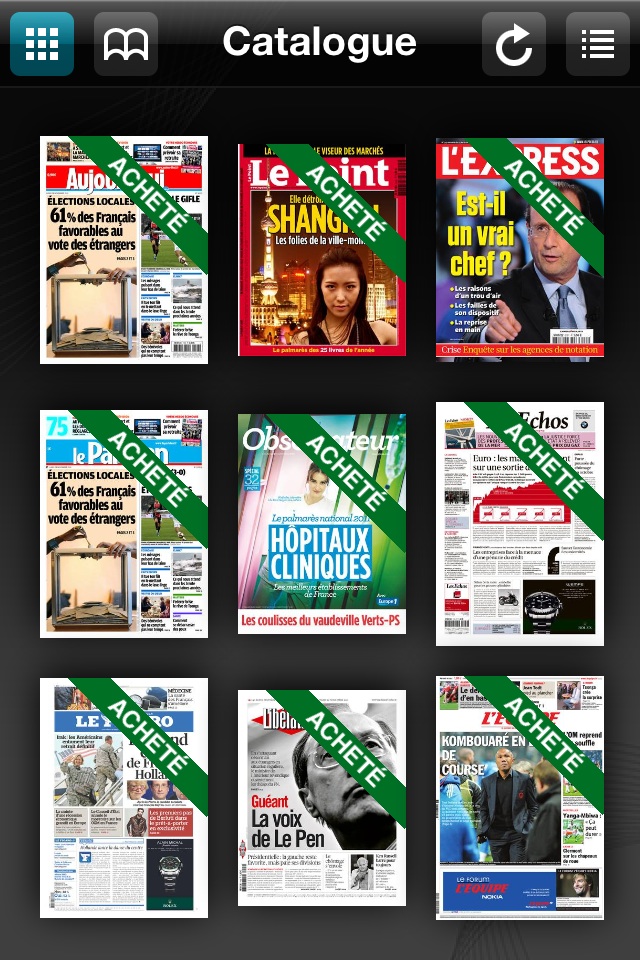
One of the speakers was Frederic Filloux, general manager of ePresse Consortium, the “digital kiosk” or newsstand from ePresse which launched in July this year after just six months of development by a two-man team (the catalogue section of the iPhone app is shown in the screenshot on the left).

Filloux gave an interesting insight into the model and the online challenges of the industry in which it performs.

He said the kiosk has a “news DNA”, leaving the leisure magazine market to other outlets.

“It is highly selective. It had just eight publishers at start, and might have grown to 12 in January. It is capturing an 85 per cent reach, the market is quite concentrated.”

I spoke to him more about the platform after the session, when he also discussed how ePresse would be working with Google’s One Pass system

Frederic Filloux of ePresse by journalismnews

During the session the speakers also called on editors to experiment with numerous revenue streams, and find their unique market.

Filloux told the conference “the company that will survive will be the one able to have not two but 15 different revenue streams and be able to test, experiment and find out what will be most valuable … It will have to test a lot and try many formulas.”

Fellow speaker Madhav Chinnappa, head of strategic partnerships for Google News, added that “the solution is going to be unique and individual”.

In my personal opinion the most successful paywall has probably been the Financial Times, but they have a unique set of circumstances. It took them years to develop their paywall, trying different things. They spent a lot of effort around customer data. They come from unique position. I don’t know any human who pays for a subscription to the FT, it’s companies, so that’s going to be different from most newspapers in the audience.

Tags: , , , , , , ,

Similar posts:

Investigative journalism news site ExaroNews launches

A new investigative journalism site is today marking the launch of its “field trial”, during which time it will test the platform and carry a selection of articles “to give people an idea of what is coming”.

ExaroNews aims to “hold power to account” and will launch as a fully-fledged, paywalled investigative news site “in a few weeks”, with a focus on appealing to readers in the business community, Mark Watts, the site’s editor told Journalism.co.uk.

The new organisation plans to encourage WikiLeaks-style whistleblowing, hoping those with a potential story will contact the Fleet Street-based editorial team or leave the documents in an anonymous drop box, which will launch at a later date, Watts explained.

The server is physically located outside of the jurisdiction which means it makes it much safer in terms of attempts to find out who has passed information on.

As well as hoping to have leaked documents to investigate, the team of mainly freelance journalists will spend the majority of time “crawling public data for stories that are generally going missed”.

The journalists will be “investigating governments in the widest sense of that word, investigating public bodies and what they are up to” by analysing the “increasing volume of public data available”, Watts said.

Journalists working for a mainstream media title don’t really have the time to assess and make sense of that data.

The team of journalists

The growing team of journalists working for the organisation includes “people who have worked on both broadsheet and tabloid newspapers, people who have worked in broadcasting and people from trade magazine backgrounds”, Watts told Journalism.co.uk.

One of those is former Westminster correspondent for the Guardian David Hencke, he said, plus there are “those who are much fresher out of journalism college, particularly those who have learned a bit about data journalism and a bit about how to make use of information that is put in the public domain by an array of public bodies”.

Watts himself ran the investigations unit at the now-defunct Sunday Business, and has worked on the Sunday Times and on TV programme World in Action.

Sample stories

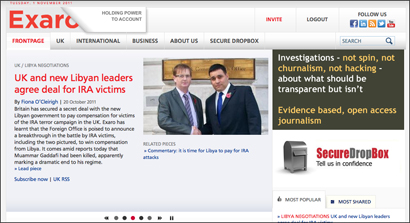
One of the stories currently on the site is on negotiations between the new Libyan government and the UK, which, according to Watts, was later reported in the Sunday Times.

Former Guardian journalist David Hencke has a series of stories on the site “how auditors found crazy examples of misspending by all sorts of Whitehall departments and all this was gathered from audit reports that were in the public domain but had not been picked up on”, Watts said.

Subscription costs

Paywall prices have not yet been set and readers will be able to access the site by paying for a subscription or can opt to micro-buy articles, Watts explained.

The site is particularly, but not exclusively, aimed at a business and City audience,  simply because we think that that’s probably where the paying audience will be, as distinct from the general consumer, which has got used to the idea of having content for free.

Once the paywall is launched readers will see a homepage with introductions to articles and will be then prompted to micro-buy or subscribe.

Investigative journalism does cost money and although people are getting used to the idea of getting news content for nothing, of course what they are often getting for free is just regurgitated, rehashed, or, to use that phrase, churned material which its no wonder is free as really it is pretty valueless.

ExaroNews is holding a launch party this evening (1 November).
Tags: , , , ,

Similar posts:

How to get involved with the Guardian’s latest venture into hyperlocal

October 19th, 2011 | No Comments | Posted by in Business, Citizen journalism, Hyperlocal

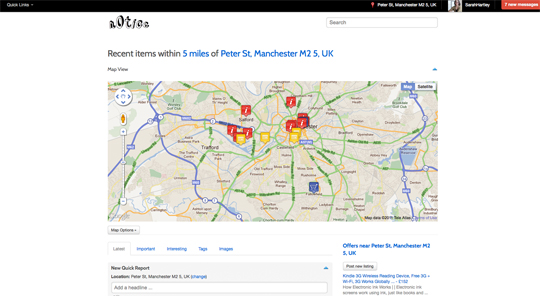
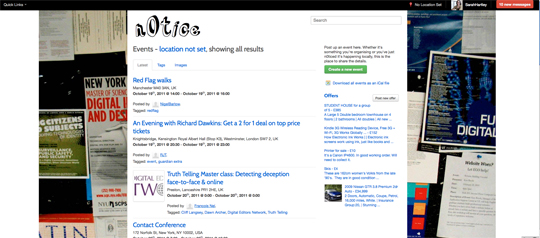
Six months ago the Guardian Media Group called time on its regional news pilot Guardian Local, but it is continuing to experiment in the local market, its latest venture being n0tice, a location-based online notice board to share and read news and notices.

The hyperlocal website and mobile site is currently in private beta, with a team of three at GMG along with an army of contributors helping to shape the online version of the village notice board. Others who want to get involved will soon be able join.

n0tice was born out of a Guardian hack day and has SoLoMo, a trend towards social, local and mobile, at its heart, but as it does not currently have Guardian branding it feels more like an independent start-up than a child of the news outlet.

The platform is a space for people to buy and sell, like the classifieds section of a local newspaper, and can be used for general notices, local news and liveblogs or updates posted by citizen reporters as community news breaks.

It is like a reverse Foursquare, where rather than checking in to a business or venue, you allow your computer or mobile to grab your location information and the site finds the community groups, items for sale and news near you.

How is it going to make money?

Listing on n0tice is free but users get the option to pay for a featured post. Pricing is yet to be confirmed but the figure currently being worked with is a charge of £1 for each mile radius from the seller’s location per day.

The site, which can be used worldwide and white labelled, will be given free to hyperlocals and sold to commercial ventures, such as anyone who wants to use the technology to set up a location-based site, according to community strategist at GMG Sarah Hartley, who was head of online editorial at the Manchester Evening News and later launch editor of the now defunct Guardian local experiment.

And of course, being a Guardian platform, it has an open API.

Along with Hartley, who this week spoke about n0tice at the Brighton Future of News Group, two others are working on the development of the platform: Matt McAlister, who is director of digital Strategy (who in May announced n0tice with this thorough explainer) and developer Daniel Levitt (whose blog is here).

One of the areas the team is looking into is how to best reward users who contribute, with a current system in place of an ‘Editor’ badge which goes to the first user in an area.

The next round of users will be invited into the platform soon soon, with a planned release of the site next year. You can sign up to be one of those by entering your email address here, you can follow @n0tice on Twitter and get involved by joining this Flickr group and “celebrate noticeboards” by contributing photographs.

Tags: , , , , , ,

Similar posts:

Sydney Morning Herald: The Australian to reveal paywall details this week

October 18th, 2011 | No Comments | Posted by in Business, Online Journalism

The Sydney Morning Herald has reported that News Limited (the Australian arm of News Corporation) will officially announce its paywall for the Australian this week, after it outlined plans for a ‘freemium’ subscription model for its online content back in June.

It had already been announced that the model will offer access to some content for free, but others will require payment.

According to the SMH report the site will charge $2.95 a week to access all content across the website and its phone and tablet apps.

It will be the first paywall for a general newspaper in Australia, an experiment that has achieved mixed success overseas by newspapers and magazines including The New York Times, the Financial Times and The Economist.

It will follow the approach of News Corp stablemate The Wall Street Journal. Some stories will be able to be read for free while others will need a subscription to be read, most likely to be its analysis and specialised sections.

At the World Editors Forum last week, three publishers – including the New York Times – outlined their paywall strategies and lessons they had learnt along the way.

Tags: , , , , , ,

Similar posts:

News International: ‘no decision made on Sun paywall’

October 17th, 2011 | No Comments | Posted by in Business, Online Journalism

News International has responded to reports that it has decided not to introduce a paywall at the Sun, as it has for the Times, Sunday Times, and did for the now-defunct News of the World site, denying that a decision has been made over charges.

A report today by paidContent suggests that new chief executive Tom Mockridge has decided against a paywall.

News International has finally decided against introducing usage fees for The Sun’s website and is performing a restructure to place more emphasis on advertising sales, paidContent understands.

The Sun will introduce a paid mobile content app imminently; it is currently consulting with readers on the appropriate fee. But it will not be following Rupert Murdoch’s edict in which he appeared to say that all his news titles’ websites should charge.

Tags: , , , ,

Similar posts:

#wef11: News outlets need to produce ‘caviar content’

October 15th, 2011 | No Comments | Posted by in Business, Journalism

In presenting the annual Innovations in Newspapers 2011 World Report, director of the Innovation Media Consulting Group Carlo Campos asked a question many delegates were likely to be interested to hear the answer to:

Are we witnessing the beginning of the end of the newspaper crisis?

And his answer:

We are starting to see hopeful signs we’re starting to pull through.

Specifically, he said, social media has begun to pay off, circulation is rising in developing countries, advertising is stabling, people are beginning to pay online and there are high profits in “decent economies”.

We have used the crisis to clean up our houses. Cut down a lot of the fat. We’re running operations that are as lean and mean as ever.

We’re abandoning volume for value. We want to have better audiences. We want to be more enaged and interact with them. Finally, we are reclaiming our content and putting a price on it.

Free is very expensive and ultimately unsustainable. Open does not need to mean free.

It is not about whether we should pay anymore, he said, it is about what people will pay for.

If you go into a bar and ask for tap water, it’s free. If you ask for champagne you have to pay for it. Peanuts are free in the bar, but if you ask for caviar you have to pay.

The problem is 80 per cent of the content we produce is peanuts. Only 20 per cent is caviar but nevertheless we want people to pay for everything. We need to produce caviar news so people will pay. You can still give peanuts to get people to come in and sit with you.

You can get the full report at this link, which offers a number of examples of innovations within news from across the world.

Journalism.co.uk is bringing you reports from the World Editors Forum throughout the conference.

Tags: , ,

Similar posts:

#wef11: Publishers share paywall strategies and lessons learnt

October 15th, 2011 | No Comments | Posted by in Business, Events, Journalism, Online Journalism

“Don’t be afraid” – this was just one of many messages given by a panel of publishers at the World Editors Forum today, who shared their experiences of erecting “paywalls” or what came to be termed by the panel as “leaky walls”.

The panel featured three news outlets which have all established paid-content systems in their own ways, although the general approach appeared to be the same, leave holes in the “paywall”.

Dirk Nolde, managing editor of Berliner Morgenpost Online in Germany spoke first, outlining the site’s paid-content model which is free for print subscribers, or 4.90 euros a month. Only some content is placed behind the wall, including local news and sports, which are charged on different models, such as by day or month etc. “Make the assets paid”, he said.

The site also offers a “first-click-free”, such as via Google or social media, which works three times a day. ” We are trying to be leaky with the paywall,” he added.

The results so far is that we have 11,000 digital subscribers which includes print subscribers who can register for free. We thought it would be horrifying but we were wrong, visits went up.

According to his statistics in December 2009, the year in which the “paywall” was set up, visits stood at 2.4 million. In September 2010 this had risen to 3.3 million and last month, in September 2011 it was at 5.1 million.

It didn’t really hurt us, we were able to tell the readers and our users there’s quality behind this paywall.

But he said the site is looking to move to a more metered model.

We will give away more stuff, use a softer approach. It is about being able to accommodate users with the fact we think you should pay for content. That’s our mission.

Fellow panel member, Matus Kostolny, editor-in-chief of SME in Slovakia, discussed how they joined up to the Piano project, a group paywall used by nine news outlets in Slovakia.

The project was set up by Piano Media. I spoke to chief executive of Piano Media Tomas Bella after the panel to find out where the company is going in the near future.

Tomas Bella, Piano Media by journalismnews

The paywall was erected in May this year. On SME it costs 2.90 euros a month or 29 euros a year and, just like Berliner Morgenpost Online, is free to print subscribers. Also similarly only some content is behind “the wall”, such as opinion and political news, the wall is removed for big stories and SME is also considering a more metered wall.

But he added that is is important to remember that “behind stories are real human beings doing real jobs that are worth paying for”.

Public opinion is one of the things we want to influence and we believe it’s so important people pay for it, but if we don’t pursuade enough people then we’ll lose our inflence. We are thinking of different ways to change the structure of paid content and still think that in the end the journalism is worth to pay for and we will pursuade our readers to do it.

Revenue for the first month across all nine sites was 40,000 euros, “which was successful story for our market”, he added.

We were afraid we would lose readers but in the end we didn’t lose anybody, there is an increase of five per cent in unique viitors. We were afraid we would lose readers in locked sections but not losing them so much.

Later he added that one of the biggest lessons is not to be afraid to experiment.

The final speaker was assistant managing editor of digital content at the New York Times, Jim Roberts, who shared some interesting details on the Times’ model, which we reported on here. He told the conference the Times’ pay model is “based on number of principles”.

We try to strike a very delicate balance betwee keeping as open as possible to news junkies, but also really wanted to instill a sense of value for our loyalists who continue to consume quality journalism.

We wanted our regular users to pay. They came to our site and still do, frequently. We felt they understood the sense of value and they would want to pay for it as many of them had done for their print subscription.

Concluding the panel the speakers were asked to share their main lessons. Dirk Nolde gave three which nicely rounded off the session:

  • Communication, communication, communication  – you have to tell users what you are doing
  • This is no supermarket. We’re not selling everything, they don’t have to pay for everything. You have to give things away to accomodate readers.
  • Produce online content that’s really worthy of being paid for. That convinces readers and makes them say “wow that was good”.

Tags: , , , , , ,

Similar posts:

Future PLC ‘considering options’ for US division

September 29th, 2011 | No Comments | Posted by in Business, Editors' pick, Magazines

Magazine publisher Future has said it is “considering a wider range of strategic options” for its US division in light of “challenging” conditions for the business.

In pre-close trading update the publisher said its position in the US “is significantly more challenging” than the UK. In July Future announced plans to “accelerate the transition of Future US into a primarily digital business”.

But this week, in a report preceding full-year earnings in November, the group said trading conditions in the US “reflecting ongoing weakness and decreasing visibility at newsstand” means the board is now considering a wider range of strategic options. PaidContent reports that the language used suggests the company “now may look to sell its business there”.

The publisher also confirmed that 10 per cent of its workforce has been cut in the UK and worldwide, which equals around 100 jobs, as part of its restructure to focus on digital and print efficiencies.

The company also claims in the latest report that the trends identified in its Interim Management Statement, published in July, have continued.

Revenues for the twelve months ending 30 September 2011 are expected to be down 6 per cent on last year, in constant currency.  The Board remains comfortable with market expectations of results for 2011, subject only to any period-end adjustment required in relation to US newsstand returns, beyond those already announced and incorporated into fourth quarter estimates.

Tags: , , , , , ,

Similar posts:

US study finds 92% of B2B journalists use LinkedIn

A study by US company Arketi Group has found 92 per cent of journalists writing for B2B publications use LinkedIn, 85 per cent of journalists are on Facebook, 84 per cent use Twitter.

Out of the journalists surveyed, 58 per cent have a YouTube account, 49 per cent have a blog, 28 per cent use Flickr, 20 per cent use Digg, 18 per cent have a MySpace account, 15 per cent use Delicious and 14 per cent use Foursquare, according to this report.

Meanwhile, LinkedIn has published advice on its blog for freelancers and those who juggle journalism careers with other jobs.

For example, a freelance or part-time journalist may also be a yoga tutor and have to decide whether or not to include details of both careers in a LinkedIn profile.

Your first decision is whether you want to feature both careers on your LinkedIn profile. If you think it might be puzzling or even damaging to one of your jobs to feature both on your profile, then simply leave off your other employment. There is no rule that you have to show everything you do on LinkedIn.

If, on the other hand, you want to promote both of your jobs or careers, here are two ways to do that effectively:

  • Embrace the slash mark: Marci Alboher, author of One Person/Multiple Careers, coined the term “slash careerist” or “slasher” to refer to individuals who can’t answer “what do you do?” with a single word or phrase. If you’re perfectly comfortable being a tech salesperson/photographer or a lawyer/SAT tutor, then proudly display this as your LinkedIn headline.

You’ll also want to list both of these positions as your current employment in your profile. The way to include more than one job as current is to put the end dates of both jobs as “present”. Note that whichever role began more recently will be displayed first.

  • If, instead, you want to highlight one of your jobs more prominently (e.g., because you’re hoping to land a new job in that field or believe you’ll have more networking opportunities related to that role), then I recommend writing a profile headline featuring that role exclusively and listing it as your only current position.

The LinkedIn blog post aso has advice from freelancers who are seeking a full-time position.

Here is a Journalism.co.uk podcast on how journalists can best use LinkedIn


Tags: , , ,

Similar posts:

FT study exposes problems in finding media information on corporate websites

August 31st, 2011 | 1 Comment | Posted by in Business, Editors' pick, PR

A study by the Financial Times and web effectiveness experts Bowen Craggs has found many corporate websites fail to provide journalists with information and serve the media in a useful and effective way – which is often not in the company’s favour in terms of generating positive press coverage.

The study finds “many press offices simply do not see the online medium as an important” and this article (part paywall) in the FT theorises that this could be as many press officers are former journalists who left the industry before the advent of online and social media.

The FT Bowen Craggs Index looks at:

How well a site caters to four areas of journalistic enquiry: the news release service and archiving; the ready availability of good quality contact information; the range of background about the company and its industry; and the provision of publication quality imagery.

News release service

The FT article states journalists “do not want to be spoon fed”:

Give them a ready-made story, and they will either ignore it, or look for a way to put a different twist on it (not necessarily in the company’s favour). The last thing they want is to write the same story as other people. What they do want is leads, which explains the keenness with which they have taken to Twitter. Companies need to understand Twitter – both to feed journalists leads and to get early warning that a nasty news storm is about to blow in.

Contact information and background about the company and its industry

The FT article states:

[Journalists] tend to be in a hurry, and impatient. Their inclination is often to pick up the phone rather than trawl a site. Companies can make themselves unpopular by failing to make press contacts easy to find.

Provision of images

The study found that “one of the most significant trends this year comes from the image library metric”:

The big move forward is the increasing use of Flickr as a complementary library: see for example Nestlé and Novartis.

A remarkable number of companies do not provide an image library at all – almost a quarter of the companies in the Index, including most of the Chinese companies but also a slew of banks – Goldman Sachs, JP Morgan Chase, Wells Fargo, Santander, Westpac and more. Why? If you do not provide images yourselves, media organisations will surely go to your rivals or to a library.

German company Siemans comes out on top and is heralded as an example of best practice of serving the media. It has an index of 28. An example of a lower score is Johnson and Johnson with an index of nine.

Tags: , , ,

Similar posts:

© Mousetrap Media Ltd. Theme: modified version of Statement